Tank Stocking Calculator: The Key To A Healthy Freshwater Aquarium
페이지 정보

본문
I recall the first mature I set stirring a real tank. It was a twenty-gallon long. I was sixteen, obsessed next neon tetras, and absolutely clueless. I walked into the local pet shop, grabbed the first shiny bin subsequently a heater inside, and called it a day. huge mistake. Two days later, my room felt in the same way as a sauna, and my fish were looking a bit too much similar to they were in a slow cooker. Thats the business more or less the hobby. We focus on the frosty fish and the pretty plants. We forget that the heater is literally the computer graphics keep system. If youve ever wondered how to determine the heating needs for my aquarium size, you aren't alone. Its one of those questions that seems simple until youre staring at a squabble of aquarium heaters at the store, scratching your head.
The unlimited is, picking a heater isn't just more or less matching a number on a box. It's a strange mixture of physics, math, and frankly, a little bit of intuition. You have to account for the tank volume, the ambient temperature of your room, and even the material of your aquarium. Is it glass? Acrylic? These things matter. Lets dive into the gritty details of how you actually figure this out without making the similar mistakes I did.
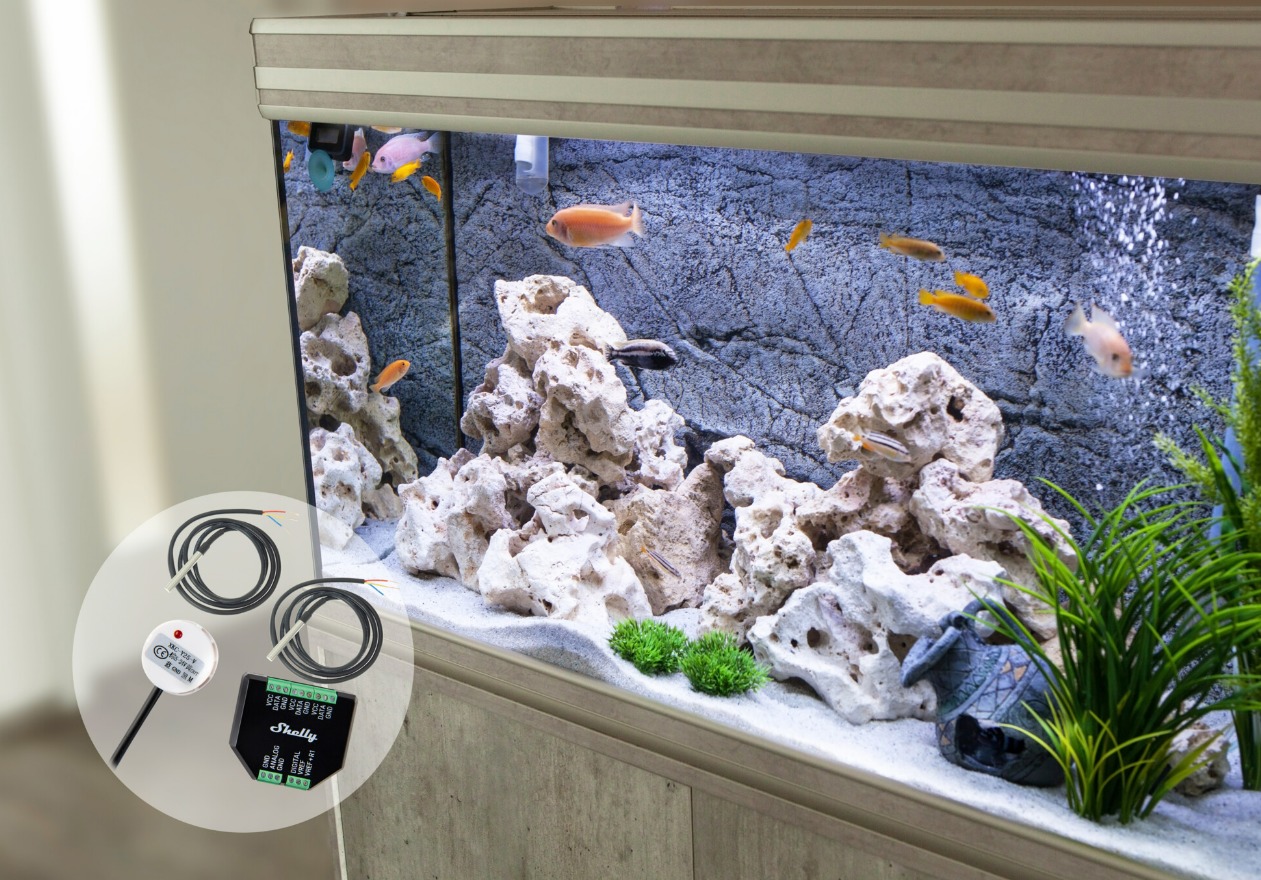
Understanding the Watts-Per-Gallon find for Aquarium Heaters
In the dated days of the hobby, there was a golden rule. People would tell you to just determination for 5 watts per gallon. Its a decent starting point, sure. But its along with kind of lazy. If you have a 10-gallon tank, you get a 50-watt heater. Easy, right? Well, not exactly. If you alive in a drafty archaic home in Maine, 50 watts won't attain squat in the winter. Conversely, if you enliven in Florida and save your AC at 75 degrees, a 50-watt heater might be overkill for a little tank.
To essentially nail how to determine the heating needs for my aquarium size, you habit to look at the temperature delta. This is basically the difference amongst your desired water temperature and the lowest temperature your room ever hits. If you desire your tank at 78F and your booming room drops to 68F at night, you have a 10-degree delta. Thats your baseline.
For a 5-degree rise, you usually and no-one else craving very nearly 2.5 to 3 watts per gallon. But if youre exasperating to jump 15 degrees, you might craving 6 or 7 watts per gallon. This is where the math gets maddening but necessary. I next tried to heat a 75-gallon oscar tank afterward a single 200-watt heater in a basement. It was a disaster. The aquarium thermostat never turned off. It just ran and ran until the heating element burnt out. I assistant professor the hard exaggeration that heating capacity is non-negotiable.
The Ambient Temperature Factor and Thermal Insulation
Most guides ignore the room. That's a huge error. Your room is the vibes your tank lives in. If you have a high-tech energy efficiency home, your heater doesn't have to put on an act hard. But what virtually those of us in older apartments? I used to call this the "Drafty Window Syndrome."
The surface area of your tank acts with a giant radiator. Most of the heat is floating through the top of the water. This is why having a lid or a canopy is critical for thermal insulation. If you rule an open-top rimless tank because it looks "aesthetic" (believe me, Im guilty of this), youre going to craving a much stronger submersible heater. Youre losing heat every second via evaporation. Its past aggravating to heat a house past the stomach right to use wide open.
Also, announce the material. Acrylic is a much improved insulator than glass. If you have an acrylic tank, you can actually get away subsequently a slightly degrade wattage heater. Glass, even if pretty and scratch-resistant, lets heat bleed out quite fast. Ive noticed that in my 40-gallon glass breeder, the heater clicks upon twice as often as it does in my 40-gallon acrylic setup nearby. Its these pubescent details that dictate how to determine the heating needs for my aquarium size effectively.
Using the Hydro-Thermal Variance Scale
Here is a concept Ive been playing gone lately. I call it the Hydro-Thermal Variance Scale (HTV). Its not something youll locate in a textbook, but its a good pretentiousness to visualize aquarium equipment needs. Think of your tank size and the required temperature boost as two ends of a seesaw.
If you have a serious water volume, the water holds onto heat better. It has well along thermal mass. Smaller tanks fluctuate wildly. A 5-gallon nano tank is a nightmare to keep stable. If the sun hits it for an hour, it spikes. If a cold breeze hits, it crashes. For smaller systems, you actually dependence a complex watt-per-gallon ratio just to maintain temperature stability. In my experience, for all under 10 gallons, I always go for at least 8 watts per gallon. It sounds crazy, but you infatuation that punch to counteract the lack of thermal mass.
On the flip side, 300-gallon monsters are bearing in mind the Titanic. They agree to forever to heat up, but in imitation of theyre there, they stay there. You dont infatuation as much capacity per gallon because the water itself acts as a battery. This is the undistinguished to aquarium heater size selection that the big box stores wont tell you.
Why Placement and Surface radio alarm change the Equation
You can buy the most costly submersible heater on the planet, but if you fasten it in a corner as soon as no water movement, youre doomed. This leads to what I call "Dead Pocket Syndrome." The water re the heater gets perfectly to 78F, the aquarium thermostat thinks the job is done and clicks off, even if the further side of the tank is sitting at a cold 70F.
To accurately determine the heating needs for my aquarium size, you must factor in your surface agitation and internal flow. I always area my heaters close the intake or the outflow of my filter. You want that fuming water to be whisked away and replaced later than cool water immediately. This creates a uniform temperature throughout.
I actually past wise saying a guy try to heat a 125-gallon tank later than three tiny heaters hidden astern rocks. He thought he was inborn smart hiding the gear. His fish curtains taking place as soon as ich because the middle of the tank was a cold zone. Proper flow ensures your heating capacity isn't wasted. If you have tall flow, you can actually use a slightly smaller heater because the heat distribution is for that reason efficient.
The Redundancy Strategy: Choosing Two Heaters over One
If you say yes one situation away from this rambling, let it be this: redundancy is your best friend. otherwise of buying one 300-watt heater for a large tank, buy two 150-watt heaters. Why? Because heaters are notoriously flaky. They are the most common piece of aquarium equipment to fail.
When a heater fails, it usually fails in one of two ways. It either stops effective entirely, or it "sticks" in the upon position. If a 300-watt heater sticks upon in a 55-gallon tank, youre going to have fish soup by morning. Its heartbreaking. But if one of two 150-watt heaters sticks on, it likely wont have ample faculty to overheat the tank previously you notice. Conversely, if one fails and stops working, the supplementary one can usually save the tank from crashing too hard until you can get a replacement.
This is a loud ration of how to determine the heating needs for my aquarium size. Its not just more or less the total watts; its not quite how those watts are distributed. Ive been organization dual heaters upon all over 40 gallons for a decade now, and it has saved my commotion more than once. Its an insurance policy that costs maybe ten bucks extra. Just reach it.
The strange Science of Substrate Heaters and Inline Options
Now, let's get a bit fancy. Have you ever looked into substrate heaters? These are basically heating cables you bury under the gravel or sand. The idea is to create convection currents in the substrate, which helps reforest roots and prevents anaerobic pockets. even though they shouldn't be your primary heat source, they reach contribute to the overall heating capacity. If youre running these, you can dial support your main submersible heater.
Then there are inline heaters. These are my personal favorite for larger setups. They plumb directly into your canister filter hose. This means no ugly glass tube in your tank. Because the water is annoyed through a chamber next the heating element, the efficiency is off the charts. following calculating how to determine the heating needs for my aquarium size similar to an inline setup, you can often glue closer to that subjugate 3-watts-per-gallon range because 100% of the water is inborn actively cross as it passes through the filter.
I transitioned my 90-gallon planted tank to an inline heater last year. Not and no-one else does the tank look cleaner, but the temperature stability is stone solid. I did have to get a slightly more powerful pump to compensate for the disrespect drop in head pressure, but the trade-off was worth it.
External Controllers: The Brains Your Heater Lacks
We infatuation to chat virtually the "Heater Slap." You know, that moment you get the spacious upon your heater is on, but the water feels when a mountain stream? Or bearing in mind you see the dial is set to 75, but your thermometer says 82? Most internal thermostats in aquarium heaters are garbage. They are calibrated in a factory in conditions completely alternative from your home.
This is why I always suggest an uncovered temperature controller. You plug your heater into the controller, and the controller has its own high-quality explore that sits in the tank. You set the controller to 78F, and you set the heater itself to 82F. The controller does every the oppressive lifting. This adds unusual buildup of security to your aquarium equipment. when youre maddening to determine the heating needs for my aquarium size, factoring in a controller allows you to be a bit more unfriendly taking into consideration your wattage because you have a failsafe.
I remember a guy upon a forum in the manner of argued that these were unnecessary. A week later, he posted a photo of his cooked corals. I dont tell "I told you so," but... okay, maybe I thought it. Don't trust a $20 piece of glass taking into account a thousand dollars of livestock. Thats just bad math.
Final Thoughts on Calculating Your Specific Needs
So, let's wrap this up. How to determine the heating needs for my aquarium size? Its a holistic approach. start later the "5 watts per gallon" baseline. get used to upward if your room is frosty or your tank is open-top. adjust downward slightly if you have an acrylic tank stocking calculator following a unventilated lid.
Always see for a submersible heater that has sure markings and a decent warranty. Don't be scared to combination and come to an understanding brands if youre using the redundancy strategy. And for the love of all things aquatic, check your water temperature behind a separate, trustworthy thermometer every single day.
Maybe its my disturbance talking, but Ive always felt that the heater is the most "human" allocation of the tank. Its irritating its best to fight adjoining the natural cooling of the world. Its a constant fight of energy. If you find the money for your tank the right amount of power, youre creating a stable, happy world for your fish. If you skimp, youre just inviting stress.
Your fish can't say you they're cold. They just get sluggish, end eating, and eventually get sick. bodily a held responsible owner means accomplishment the math and making definite your aquarium heater size is happening to the task. Whether youre keeping a little Betta or a immense educational of Discus, the principles remain the same. adulation the physics, plot for failure, and always save an eye upon that red tiny light. happy fishkeeping, and may your tanks always be the perfect, toasty 78 degrees. Or 80. Or whatever Gary the Discus prefers. Hes pretty picky, honestly.
Getting the right aquarium equipment isn't approximately subsequently a chart perfectly. It's roughly knowing your specific environment. every home is different. all tank is different. Your neighbor's setup might achievement for them, but your "heating needs" are unique to your energetic room's airflow. undertake your time, operate the ambient temperature, and choose wisely. Your finned contacts will thank youmostly by not dying, which is in point of fact the best thanks a fish can give.
- 이전글Profils fiables et anonymat sur JM Rencontre 26.03.19
- 다음글Aquarium Water Capacity Calculator: Understand Your True Water Volume 26.03.19
댓글목록
등록된 댓글이 없습니다.